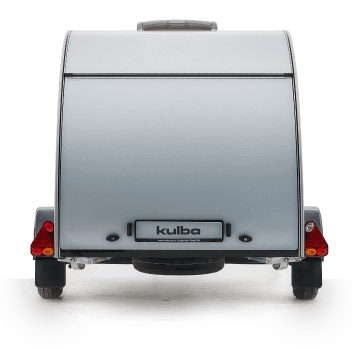
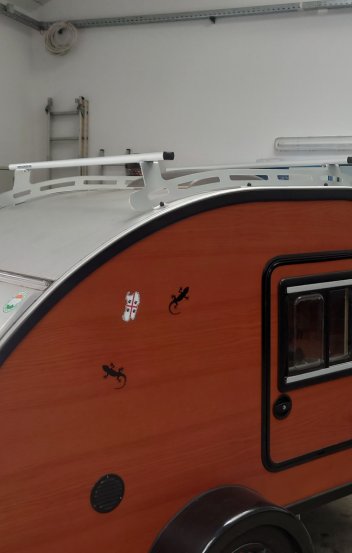
Thanks to their compact size and low weight, all Kulba models, as well as most other teardrop trailers, fall into the O1 trailer category (up to 750 kg maximum permitted mass). This classification offers major advantages, especially when it comes to allowed driving speeds across Europe. However, speed limits for towing a mini caravan still vary from country to country. Understanding these differences is essential for safe, legal, and stress-free travel - especially if you plan to explore multiple destinations in one trip.
Why teardrop trailers are typically O1 category
Most teardrop trailers and compact mini caravans are engineered to stay below the 750 kg threshold, meaning:
- No additional trailer driving license is required in many countries
- Higher permitted towing speeds compared to heavier caravans
- Better stability and efficiency when paired with modern vehicles, including EVs
This makes the Kulba teardrop trailer one of the most travel-friendly camping solutions in Europe.
General speed rules when towing a teardrop trailer
While regulations differ by country, the following patterns are common for O1-category teardrop trailers:
- Urban areas: usually limited to 50 km/h
- Rural roads: typically 70–90 km/h
- Motorways: anywhere between 80 and 130 km/h
- Local signage, weather conditions, and national rules always take priority
Even though a Kulba teardrop trailer may be technically capable of higher speeds, legal limits must always be respected.
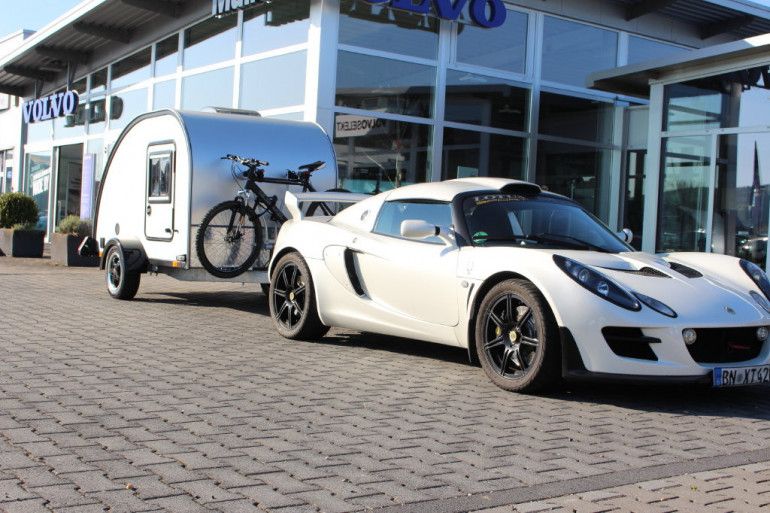
Country-specific rules you should know
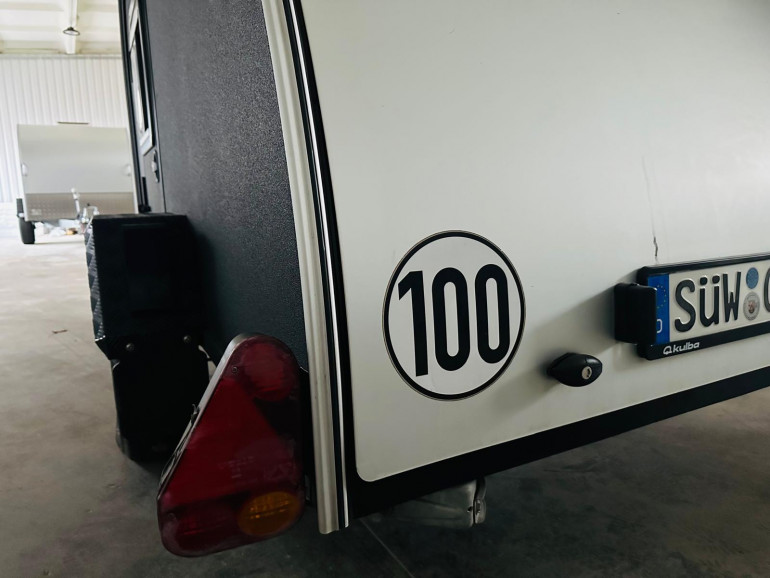
Germany – Tempo 100 Certification
Germany has one of the most well-known trailer-specific speed regulations:
- 80 km/h is the default motorway limit when towing a mini caravan
- 100 km/h is allowed only with a Tempo 100 Certificate
- Requirements include:
- Approved axle and suspension
- Speed-rated tires
- Proper trailer inspection and documentation
Tempo 100 applies only within Germany.
All Kulba teardrop trailer models are engineered to meet these technical requirements (for more details check equipmet of Kulba Easy, Kulba Woody, Kulba Rebel and Kulba One).
Switzerland - type approval matters
In Switzerland:
- Standard towing speed is 80 km/h
- 100 km/h may be allowed if the trailer’s type approval explicitly permits it
- No separate sticker or certification is required, unlike Germany
Countries with higher motorway limits for teardrop trailers
Several European countries allow O1 teardrop trailers to drive at speeds close to passenger car limits:
- Belgium: up to 120 km/h
- Portugal: up to 100 km/h
- Slovenia: up to 100 km/h
- Slovakia & Romania: up to 120–130 km/h
These higher limits make Kulba teardrop trailers especially attractive for long-distance touring.
Nordic countries - safety first
In countries such as Norway, Sweden, and Finland:
- Motorway speeds with a teardrop trailer are usually limited to 80 km/h
- Regulations prioritize safety due to weather and road conditions
- Enforcement is strict, even for lightweight trailers
Why teardrop trailer design still matters
Legal speed limits are one thing - but engineering quality is just as important. A well-designed teardrop trailer should offer:
- Stable axle and suspension setup
- Proper tire load and speed ratings
- Balanced weight distribution
- Aerodynamic shape that reduces drag at higher speeds
This is why Kulba teardrop trailers often perform better on motorways than traditional box-shaped mini caravans, even at the same legal speed.
Practical tips for traveling with a Kulba teardrop trailer
- Always check speed limits before crossing borders
- Pay attention to local road signs
- Use navigation apps that support trailer mode
- When unsure, follow the lower speed
- Respect the manufacturer’s recommended maximum speed, even if the law allows more
Final thoughts
Kulba teardrop trailers offer one of the best balances between mobility, comfort, and legal flexibility in Europe. Their lightweight construction allows higher permitted speeds and easier cross-border travel than traditional caravans.
That said, Europe remains a patchwork of national regulations. Knowing the rules - and choosing a well-engineered teardrop trailer - ensures your journey stays smooth, safe, and enjoyable wherever the road takes you.
Click here to view a PDF table with European speed limits for mini caravans (under 750 kg) by country.
Disclaimer
This article is based on publicly available information and online research conducted at the time of writing. While every effort has been made to ensure the accuracy and completeness of the information provided, traffic regulations and towing rules may change and can vary by country and situation. Therefore, we cannot guarantee that all details are fully up to date or free from inaccuracies. If you notice any incorrect or outdated information, we would greatly appreciate it if you contact us so we can review and update the article accordingly.