The best trips start before you hook up the trailer.
If your Kulba has been sitting through winter — in a garage, under a cover, or in storage — a short pre-season check is the difference between leaving on Friday with complete peace of mind and discovering a problem at the campsite. None of what follows takes long. Set aside an hour on a mild afternoon, work through the list, and your teardrop trailer will be genuinely ready for the season ahead.
This article is the seasonal companion to our winterizing guide. If you put your mini caravan away properly in autumn, the spring check is straightforward. If you skipped some of the winterizing steps, pay particular attention to the water system section below.
1. Start outside - a walk-around inspection
Before opening anything, walk slowly around the whole trailer and look at it properly. Winter storage, even indoors, can reveal things that weren't obvious when you last used it.
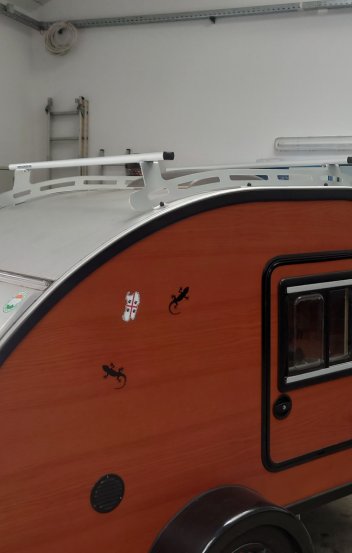
Look at the outer panels for any signs of impact, cracking, or delamination. On the Kulba Woody, check the epoxy-coated wooden exterior for any areas where the coating may have lifted or cracked — these should be addressed before the first trip to prevent moisture getting in. On the Kulba Easy, check the XPS foam panels for any damage to edges or corners. On the Kulba Rebel, the polyurethane coating is tough, but check for any deep scratches or chips. On the Kulba One, inspect the fiberglass shell for any hairline cracks, particularly around the door frame and hatch edges.
Check all exterior seals — around the door, windows, roof hatch, and any cable entry points. Press gently along the seal line. Any seal that has become brittle, cracked, or has separated from the surface should be resealed before your first overnight trip.
Check the tyres. If the trailer has been static for several months, the tyres may have developed flat spots or surface cracking. Check the sidewalls carefully and check the tyre pressure — tyres lose pressure over winter even without a puncture. The correct tyre pressure for your Kulba model is listed in the specifications.
2. Coupling, undercarriage and brakes
Work your way underneath and around the towing gear.
Check the coupling head — clean it, apply a light coating of grease, and make sure it opens and closes freely. Check the safety cable is intact and the clip is not corroded. Check the jockey wheel — it should wind up and down smoothly, and the clamp should hold it firmly at height.
Check the handbrake cable for any signs of fraying or stiffness, and test that the handbrake engages and releases cleanly. Check the overrun brake — push the coupling backward toward the trailer and make sure the mechanism moves freely. If it feels stiff or seized after winter, apply a light lubricant to the pivot points before your first trip.
Check the wheel nuts are tight. If the trailer has been stored with the wheels on, give each nut a check with a torque wrench — 85–90 Nm is the standard for Kulba models.
3. Electrical
Connect the trailer to your tow vehicle and test every light systematically: running lights, brake lights, left indicator, right indicator, reverse light. Walk to the back of the trailer while a helper operates each function, or use a trailer light tester if you have one.
Then disconnect from the vehicle and check the interior. Test all sockets — 220V, 12V, and USB. Turn on the LED cabin lighting and the galley lighting. Check the reading lights if fitted. If anything doesn't work, check the fuse box before assuming a fault elsewhere — a winter in storage sometimes causes a fuse to fail or a connection to corrode slightly.
If your trailer has an onboard battery, check its charge level. A battery left uncharged over winter may have discharged significantly. Charge it fully before your first trip and test that it holds charge — a battery that won't hold charge after a full charge cycle should be replaced before the season.
4. The water system
If you winterized properly following our winterizing guide, the water system will have been drained and the pump run dry. Before the first trip, it needs to be recommissioned.
Fill the fresh water tank with clean water. Turn the pump on and run water through the system until it flows freely from the tap with no air spurts or odd taste. Drain this first tankful away — it's there to flush the system, not to drink.
Refill with fresh water and run it again. Check under the trailer and around the tank connections for any signs of dripping — a seal or fitting that survived winter dry may show a minor weep once under pressure.
Check the tank itself for any odour. If the tank wasn't completely dry over winter, you may need to clean it with a dilute bicarbonate solution before use.
If your trailer is fitted with a gas stove, check the gas connection before lighting. Inspect the hose for any cracking or stiffness. Connect the gas bottle, turn it on and check the connection with soapy water — no bubbles means no leak. Light each burner and check the flame is clean and even.
5. Inside the cabin
Open the cabin and let it air for at least thirty minutes before doing anything else. Even well-stored trailers can develop a slightly stale smell over winter.
While it airs, check the ceiling, walls and floor for any signs of moisture or condensation marks that appeared over winter. A small damp patch in a corner is usually a seal issue rather than a structural problem — find the source before the first trip.
Check the mattress. If it was stored folded or compressed, let it expand fully and air out. Check for any mildew smell — if the mattress was stored damp, it may need a proper airing in sunlight before use.
Check the windows and roof hatch open and close smoothly. Check that the roof hatch seal is intact and that the hatch closes firmly with no rattle. Open and close the door several times — the latch should engage cleanly and the door should seal flush all the way around.
Wipe down all interior surfaces, shelves and storage compartments. Restock the cabin with bedding, clothing and personal items for the first trip.
6. The galley
Give the galley a thorough clean before restocking it. Even if you cleaned it before storage, a fresh wipe-down removes any residue or smells that have settled over winter.
Check the worktop, sink, and all storage drawers and cabinets. Restock with kitchen essentials — utensils, cooking equipment, washing-up supplies, and whatever food and drink you'll carry.
Check the foldable worktop extensions open and close properly and that the hinges are not stiff.
If fitted, check the fridge/cooler is functioning by switching it on at least a day before the first trip.
7. Your "always ready" kit
One of the best things about owning a Kulba teardrop trailer is the ability to leave at an hour's notice. That only works if certain essentials are always in the trailer — not packed each time.
After your pre-season check is done, make sure the following live permanently in your trailer throughout the season:
A small toolkit — screwdrivers, adjustable spanner, pliers. A spare bulb kit for all trailer lights. A tyre pressure gauge. A set of levelling wedges for uneven ground. A basic first aid kit. A spare wheel nut in the correct size. A torch. A small fire extinguisher (if not already fitted). A bottle of fresh water and a small stock of non-perishable food — enough for an unplanned overnight stop.
This kit adds almost no weight, takes up very little space, and means you are genuinely ready to go whenever you want to go.
Ready for the season
Work through this checklist once, tick everything off, and your Kulba teardrop trailer will be in exactly the condition it should be — clean, checked, stocked, and ready. The first trip of the season should be the one you enjoy most, not the one where you discover what you forgot to do.
When the season ends, our winterizing guide covers everything you need to put your mini caravan away properly for the winter. Do both well, and your Kulba will reward you with years of trouble-free use.
If you have any questions about maintenance, care, or preparing your teardrop trailer for the road, get in touch with us — we're always happy to help.